
Teaching Design Research Where It Matters: What a Train Station Taught My Students About Seeing
There's a moment in every design research course when a student stops looking and starts seeing. It doesn't happen in a classroom. It happens in the field — standing in a crowded space, watching a stranger struggle with something that shouldn't be hard, and realizing the built environment is full of invisible failures.
When I was teaching at the University of Oregon, I wanted my students to experience that moment firsthand. the assignment was conceived as a two-week sprint as the students were also due to leave shorlty for an overseas trip that conflicted with my class schedule. to load the learning swiftly, I sent them to Portland's train station.
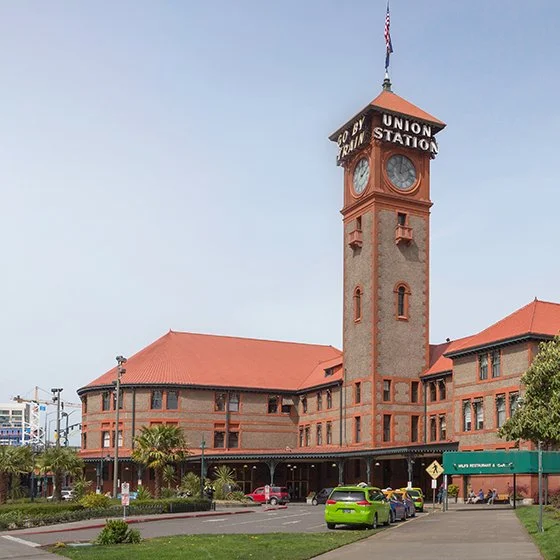
union station, portland, oregon
Why a Train Station?
Transit hubs are dense ecosystems of human behavior. People are rushed, distracted, loaded down with luggage, and often navigating an unfamiliar space for the first time. A train station compresses dozens of competing needs — movement, rest, information, commerce, safety — into a single building. That makes it a perfect laboratory for design research.
I wasn't asking my students to redesign the station. I was asking them to understand the user experience — deeply, empathetically, and the real conditions before jumping to solutions.
Getting Students Out of Their Heads and Into the Space
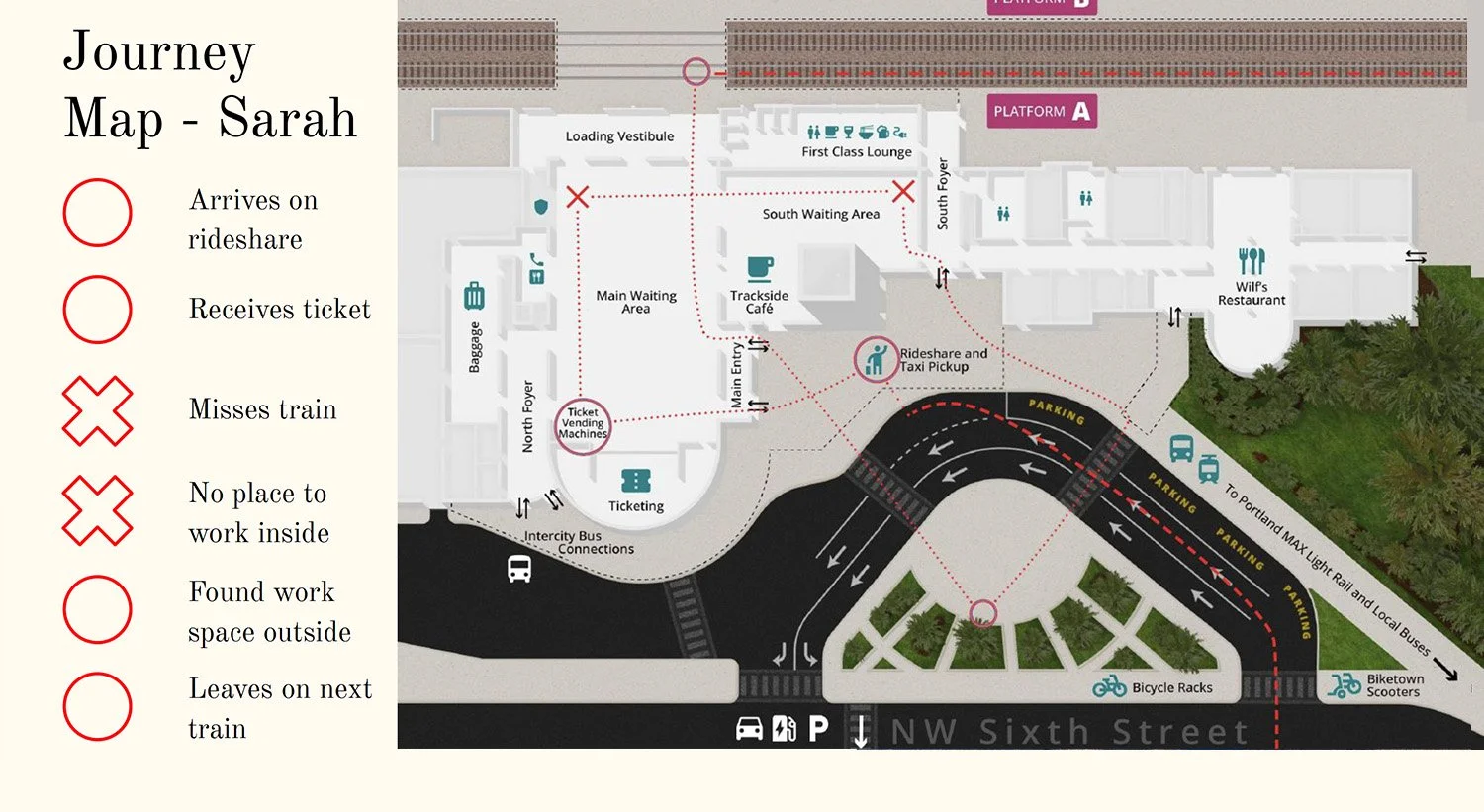
The project began with quantitative research (info and data found through online sources), then the students set out to conduct direct observation and interviews. they spent hours in the station, watching how people actually moved through the space rather than how the space assumed they would. They mapped foot traffic patterns. They noted where people paused, where they looked confused, where they clustered unnecessarily. They documented what people carried, how they checked the time, and how they oriented themselves upon their first arrival at the station.
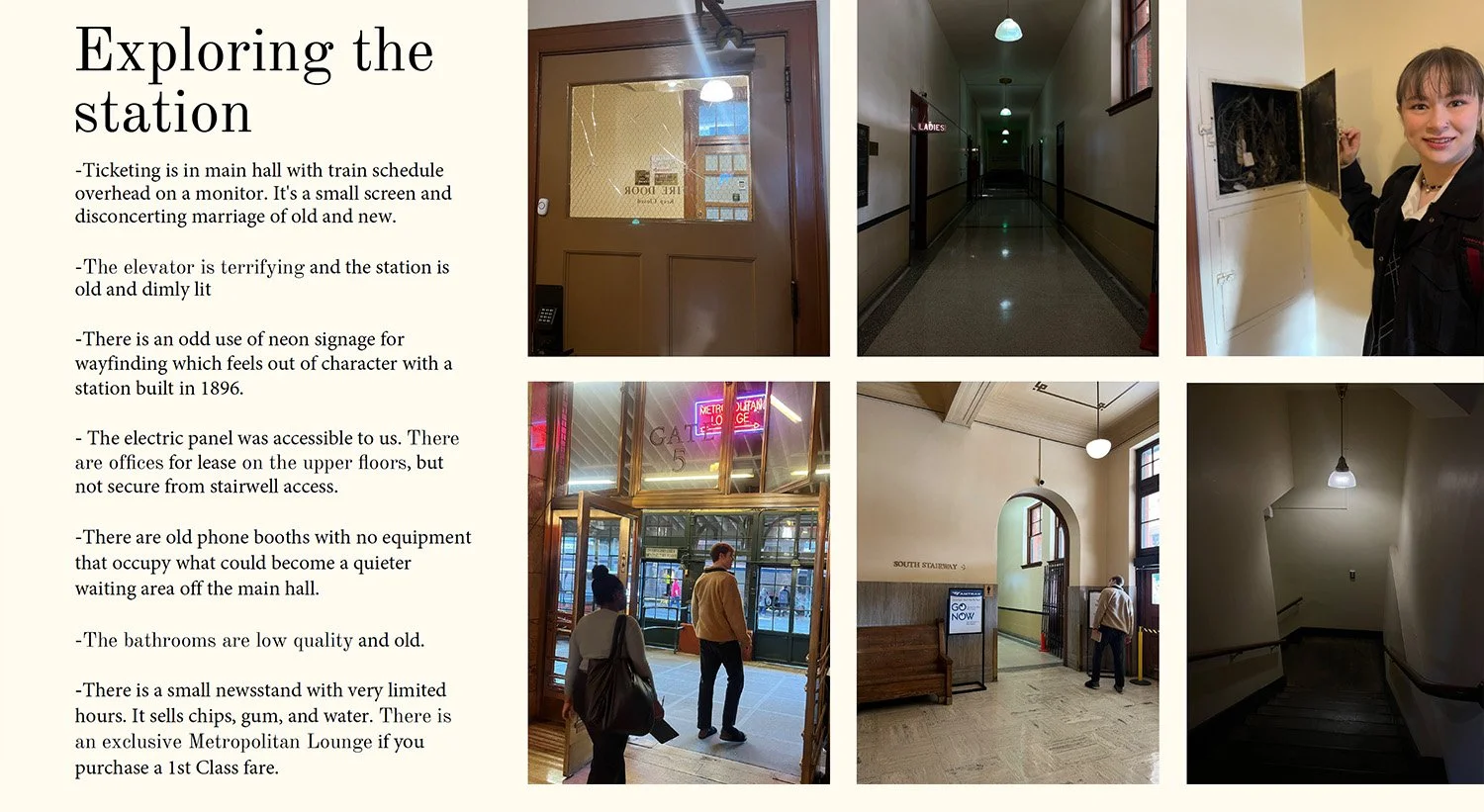
station interior
Then they conducted interviews — not with stakeholders or administrators, but with the travelers themselves. They asked open-ended questions: please tell me about your ticket purchasing experience—What felt smooth and easy? What felt frustrating? When did you arrive relative to your departure — and why that early or late? What did you expect to find at the station that you didn't?
This two-pronged approach — watching what people do and listening to what people say — is the backbone of solid design research. The gaps between those two data sets are where the most important insights live.
What They Found
The findings were striking, not because they were exotic, but because they were so fundamental. the station master was alerted to the students on-site presence for permission and safety reasons. as their teacher, i was present in the station during student hours and provided inquiry support to students before their one-on-one interviews.
safety is top of mind. students, working in teams of three (m/f), were documenting a station operating within a neighborhood under significant stress. The wayfinding gaps, missing amenities, and chaotic queuing they identified aren't just inconveniences; in a high-crime context, they become safety issues. Confused travelers circling a station looking for signs, or congested queuing that eliminates personal space, experience amplified problems when the surrounding environment already feels uncertain.
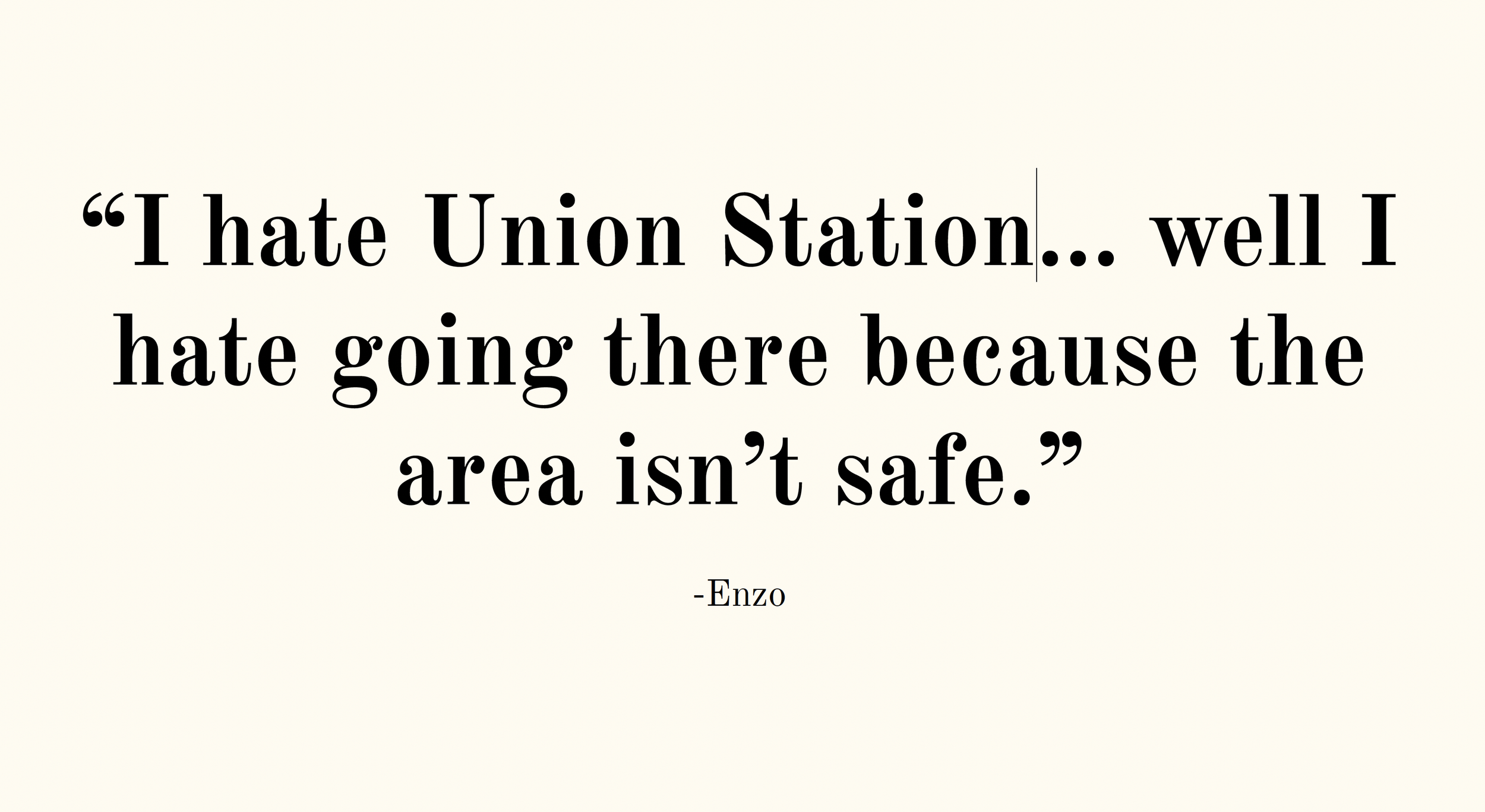
union station traveler interviewee
the station had a wayfinding problem. Signage was inconsistent and often poorly placed. Travelers arriving for the first time had no intuitive sense of where to go — where to buy tickets, where to wait, where to board. The spatial cues that good design provides were largely absent.
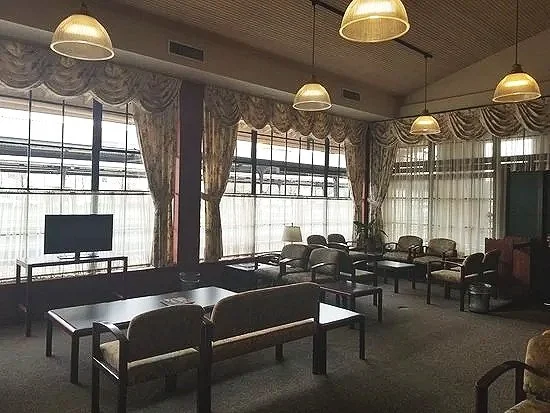
metropolitan first-class lounge, portland union station
It lacked the comfort and amenities today's digital traveler expects. other than the first-class lounge, Charging outlets were scarce. there is free basic wifi throughout the station, but it was unreliable. Seating was limited and hard wooden benches were uncomfortable for extended stays. The station had been designed for an era when travelers showed up, waited briefly, and boarded. It hadn't adapted to the reality of passengers who arrive early, work remotely from their phones or devices, and treat transit time as productive time.
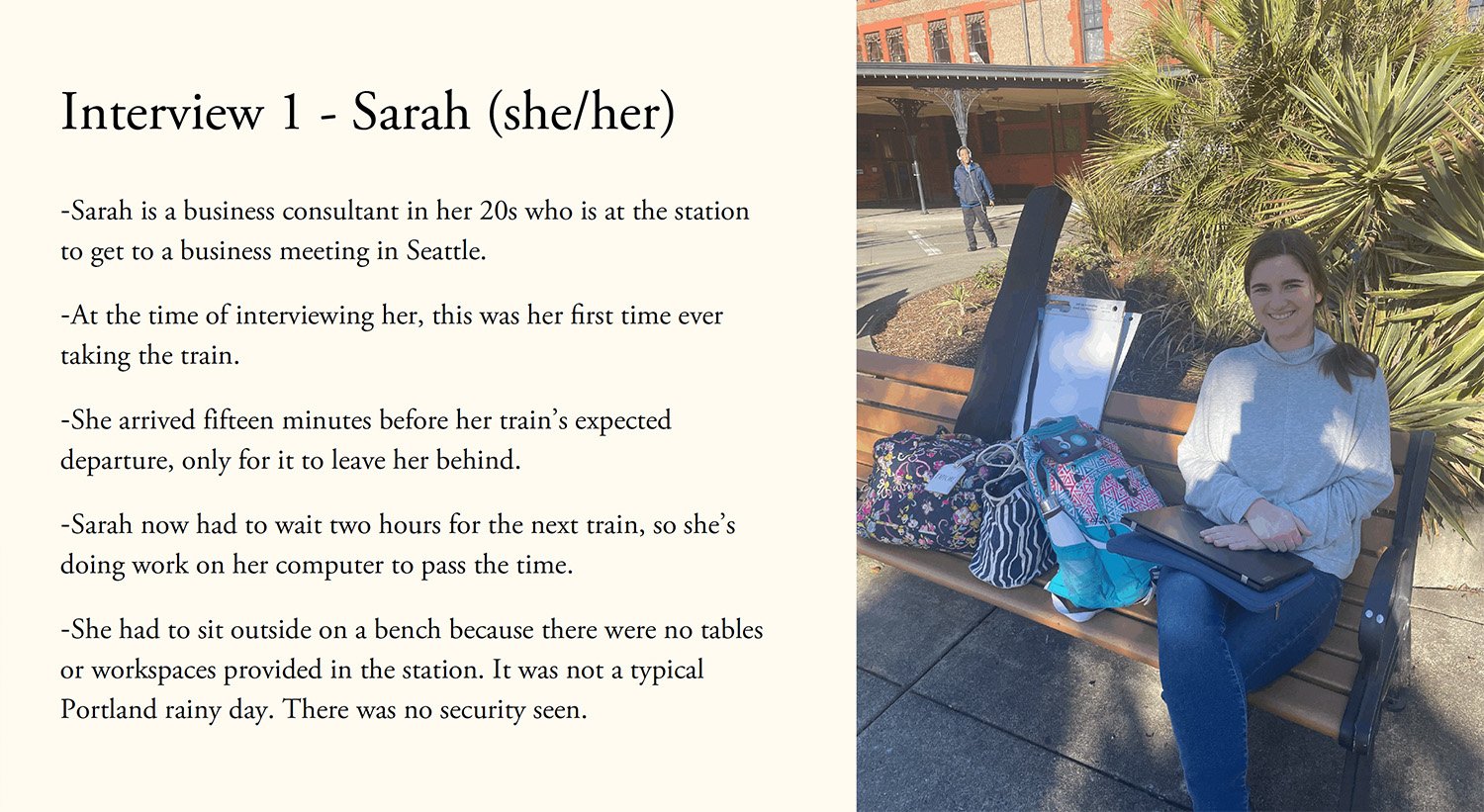
the station is a connector route for amtrak to overnight trains, but the most common use is for day passengeres traveling to seattle. as a result, there are tourists who need bag storage is they have an extended wait for the overnight train versus the day-tripper who needs to work as they wait.
The queuing system created its own chaos. Perhaps the most revealing finding was that the boarding process for trains was haphazard and disorganized. Passengers lining up to board directly interfered with the flow of other travelers trying to reach ticket counters, access information, or simply pass through the station. The space hadn't been designed to separate these competing flows of movement, and the result was a recurring bottleneck that frustrated everyone involved.
None of these problems required advanced technology to identify. They required presence, patience, and a willingness to take the user's experience seriously.
The Pedagogical Point
I could have taught my students about wayfinding theory in a lecture hall. I could have assigned readings on service design and passenger flow analysis. those things have their place, But nothing replaces the lived experience of standing in a space, clipboard in hand, watching a seventy-year-old traveler with two bags circle the same hallway three times looking for a sign that isn't there.
Design research isn't a phase you complete before the "real" design work begins. It is design work. It's the practice of building genuine understanding before proposing change. And when students learn to do it well — to observe without assumptions, to listen without leading, to synthesize patterns from messy human reality — they become designers who solve actual problems rather than imagined ones.
What This Means for Design Educators
If you're teaching design research, here's what I'd encourage:
Pick a real place. Not a case study — a place your students can physically go to, return to, and spend meaningful time in. Complexity is a feature, not a bug. Transit hubs, public markets, public parks, and municipal buildings all work beautifully because they serve diverse populations with competing needs.
Separate observation from interpretation. Have students document what they see before they discuss what it means. This discipline is harder than it sounds, and it's one of the most valuable research habits they'll develop.
Center the people, not the space. The station isn't the subject. The travelers are key. Every finding my students surfaced came from paying close attention to human behavior and then asking why the environment or experience wasn't supporting the user.
Let the findings be unglamorous. The most important design research insights are often embarrassingly obvious in hindsight — there's no clear sign telling people where to go, and the line for the train blocks the path to the ticket counter. Students sometimes want to uncover something novel. Teach them that confirming what seems obvious, with evidence, is powerful and necessary work.
the students’ final research report was presented to “prosper portland”, the managing organization of union station. the administrator has added the report to a long-term planning document for the area that is underway.
The Bigger Picture
We're living in a moment when designers are increasingly expected to engage complex systems — healthcare, education, urban infrastructure, climate adaptation. The students who will thrive in that landscape aren't the ones with the flashiest renderings. They're the ones who know how to walk into an unfamiliar situation, observe with rigor and empathy, and build understanding that leads to meaningful change.
A train station in Portland taught my students that. Not because the station was broken in some spectacular way, but because it was broken in all the quiet, ordinary ways that real design problems tend to be.
And learning to see those quiet failures clearly? That's where design begins.